The Competitive Intelligence Gap: Why You're Always Behind
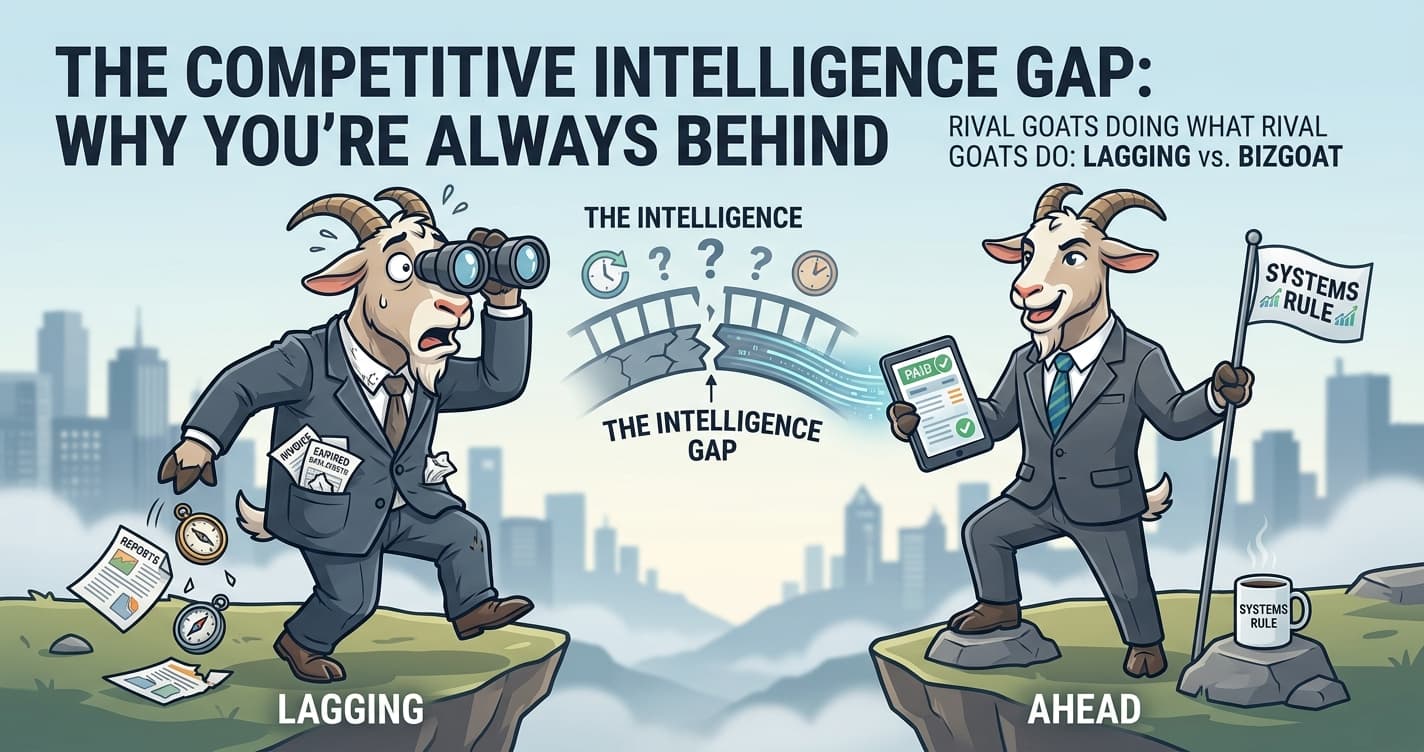
Your competitors moved their pricing yesterday. You'll find out next quarter. Here's why that gap costs you deals and how to close it.
The Competitive Intelligence Gap: Why You're Always Behind
Your competitor changed their pricing last week.
You didn't know until you lost a deal to them.
They'd added a new tier, undercut your entry price, repositioned their entire service line. And you're still operating on last month's information.
This happens to businesses every day. You're not behind because your product is worse. You're behind because you don't see what the market is doing until it's too late.
By then, you're reacting instead of leading.
The Information Lag Is Your Real Problem
There's a gap between when your competitors move and when you know about it. A week gap. A month gap. A quarter gap.
In that gap, they're capturing market share. They're building momentum. They're resetting customer expectations.
You find out because a prospect tells you, or because you lose a customer, or because someone mentions it in passing.
By then, the damage is done.
Why This Gap Exists
You're running a business. You're not monitoring competitors obsessively. Most business owners check a competitor site once every few months, if at all.
You don't have a system. You have a vague intention.
And intentions don't scale.
What Happens in the Gap
Your competitor drops prices 15%. Within two weeks, you start hearing about it from lost opportunities and customer churn.
You immediately lower prices. Now you're in a race to the bottom, playing catch-up, instead of staying ahead.
Your competitor adds a new service line. You don't know what features it has or how it's positioned. You find out when your sales team starts losing deals and asking what "that new thing they're offering" is.
By the time you understand it, they've already captured the early adopters.
Founder Instinct Isn't Enough
You know your market. You talk to customers. You understand the landscape.
But you don't have a systematic way of seeing changes as they happen. You're running on pattern recognition and gut feel, not data.
And pattern recognition misses surprises.
The Cost of Delayed Discovery
A marketing agency finds out their main competitor repositioned 30 days after it happened. By then, three prospects have chosen the competitor based on the new positioning.
A SaaS company discovers a competitor added AI features to their messaging. They're scrambling to respond, instead of leading with their own AI roadmap.
A contractor loses two jobs to a competitor's automated estimate follow-up system. They're asking why, instead of having that system months ago.
These aren't hypotheticals. These happen constantly.
What Real-Time Intelligence Changes
When you see competitor moves as they happen, you can respond on your timeline, not theirs.
You adjust your positioning while they're still rolling out the change. You publish competitive content before they've even finished their blog post.
You have options. You have agency. You're not just reacting.
The Gap You Can Close
RivalGoat monitors your competitors automatically and tells you what changed. Today. Not next quarter. Today.
New pricing. New pages. Updated messaging. You see it the day they launch it.
Now you can respond on your timeline, not theirs.
Start Today
The question isn't whether your competitors are moving.
The question is: do you know about it yet?
Close the intelligence gap. Monitor your competitors. Stay ahead instead of catching up.
If you're serious about protecting your links, your data, and your brand, it's time to stop sharing raw URLs.
Start using Bilt.ly.
Get started free →