Feature Voting vs. Guessing: How to Build What Users Actually Want
Building features nobody wants wastes weeks of development. Feature voting shows you exactly what users need before you code.
Feature Voting vs. Guessing: How to Build What Users Actually Want
You had an idea for a feature. You were sure it's what your users wanted. You built it. Spent two weeks of development time on it.
Three people used it. No one asked for it again.
Meanwhile, you haven't built the feature that's been requested by 40 different users over the last six months.
The Cost of Building the Wrong Thing
This is the silent killer of early-stage software. You guess. You're wrong. You waste development time. And worse, you don't build the thing people actually want.
If you've got five features to build and only time for two, you better know which two matter most.
Most teams don't. They guess based on who's loudest, what seems innovative, or what the founder thinks is cool. You're making five-figure decisions based on hunches.
Why Guessing Fails
The people who speak up aren't always representative. The loudest customer isn't always the most valuable one. The thing that sounds interesting might solve a problem for 2% of your user base.
One customer complains loudly, and suddenly they're driving your roadmap.
How Feature Voting Changes This
When you set up a voting board where users can suggest features and everyone else can vote on them, something shifts.
Suddenly, you're not guessing. You've got data. Real data. From real users.
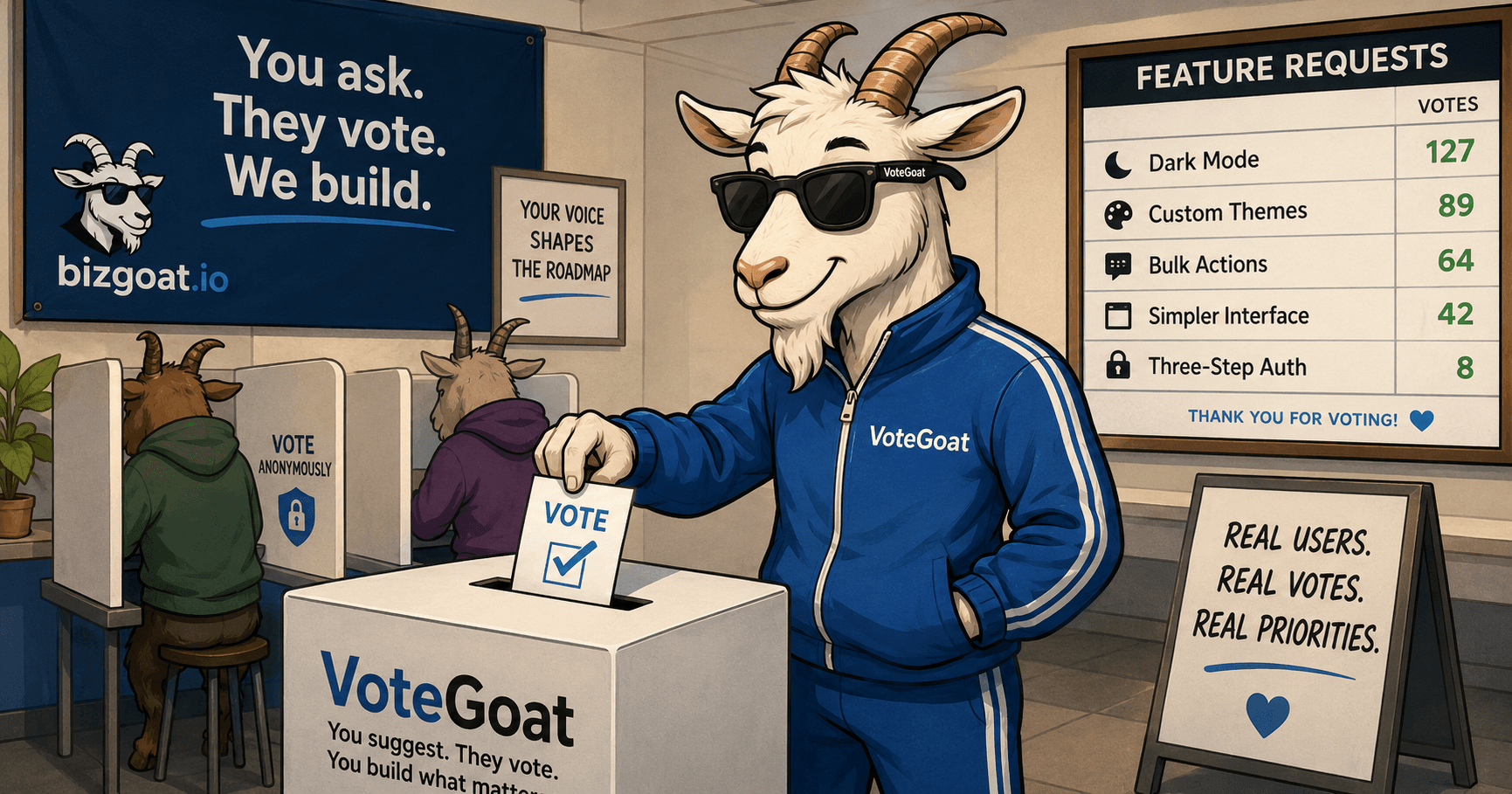
You can see that 127 people want dark mode. Maybe 8 people want three-step authentication. You build dark mode first. When those 127 people see dark mode in the next update, they feel heard.
That builds loyalty. Loyalty builds retention. Retention keeps the lights on.
The Anonymity Thing
Here's something people don't expect: anonymous voting gets more honest feedback.
When users can vote without their name attached, they vote on what they actually want, not what they think they should want.
That person who wants a simpler interface votes anonymously. They're not worried about offending power users.
You get clearer signal.
Real Product Teams Already Do This
If you look at how teams like Figma, Slack, and Notion handle product direction, they don't guess. They have feature request voting. They publish roadmaps based on what users voted for.
They're transparent about it. And they're not doing this because they're nice. They're doing it because it works. They build the right things. They waste less time.
What Happens With Voting
You stop debating in your team about what to build next. You have the data. You stop building features no one wants.
You spend your development time more efficiently because you're not gambling.
Start Today
You don't need a complicated system. You need users to be able to suggest features and vote on what matters to them.
VoteGoat is a simple voting board. Users suggest, other users vote, you see what actually matters. It's FREE to start.
Then you build in order of what people want, not what you guessed. Your roadmap should be driven by your users, not your intuition.
If you're serious about protecting your links, your data, and your brand, it's time to stop sharing raw URLs.
Start using Bilt.ly.
Get started free →