Solar Powered Shed or Workshop Setup for Marine Applications 2026: A Comprehensive Guide
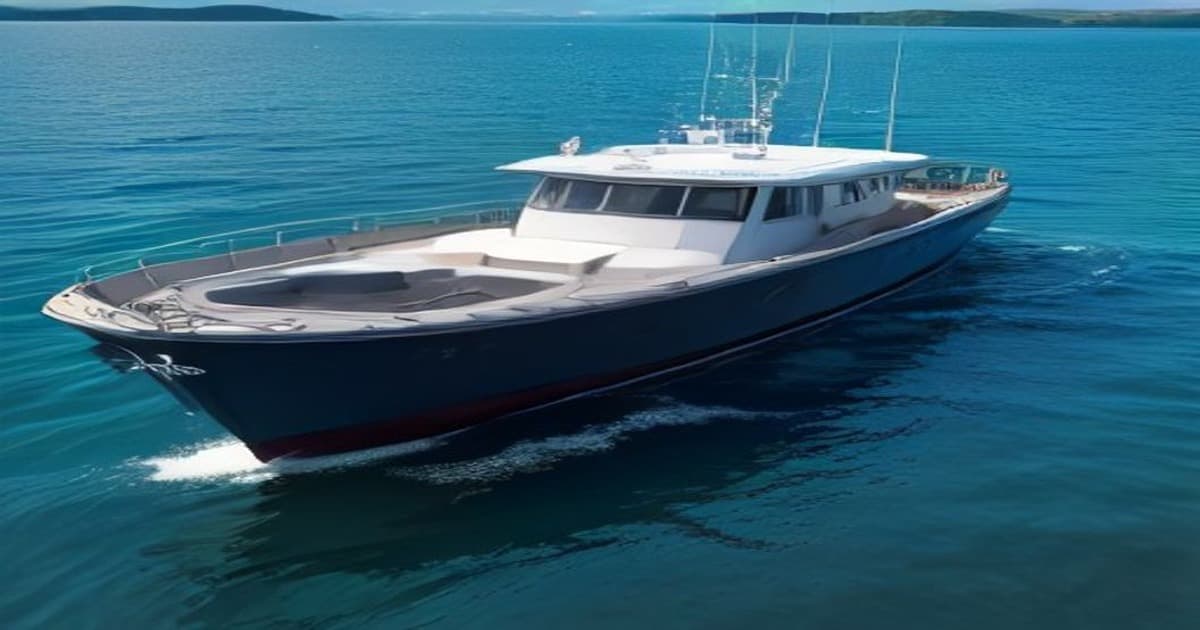
Building a solar powered shed or workshop for marine applications offers reliable off-grid power, reduces fuel dependence, and supports sustainable boating lifestyles. This guide walks you through every step—from choosing durable solar panels and LiTime lithium batteries to wiring inverters and mounting kits—so you can create a seaworthy, energy‑independent workspace in 2026.
Solar Powered Shed or Workshop Setup for Marine Applications 2026: A Comprehensive Guide
If you’re looking to power a shed, workshop, or small outbuilding near the water with clean, renewable energy, a solar powered shed or workshop setup for marine applications 2026 is an excellent solution. Whether you need to run tools, charge batteries, power lighting, or keep refrigeration running on a dockside workshop, solar energy provides independence from noisy generators and costly shore power. This article walks you through every component—from solar panels and lithium batteries to inverters, charge controllers, and mounting hardware—while highlighting trusted products you can purchase today via the affiliate links provided.
Introduction to Solar Powered Sheds and Workshops
Marine environments demand equipment that can withstand salt spray, humidity, vibration, and temperature swings. A well‑designed solar powered shed or workshop solves these challenges by delivering quiet, emission‑free power exactly where you need it. In 2026, advances in photovoltaic efficiency, LiFePO4 battery chemistry, and smart MPPT controllers make it easier than ever to size a system that meets your workshop’s load while staying within a reasonable budget.
Before diving into parts, calculate your daily energy consumption. List every device (power tools, lights, radio, battery charger, small fridge) and note its wattage and hours of use per day. Multiply wattage by hours to get watt‑hours, then add a 20 % contingency for inefficiencies. This total will guide your panel wattage, battery capacity, and inverter size.
For a typical marine workshop running a 100 W drill for 2 hours, a 50 W light for 5 hours, and a 60 W fridge for 12 hours, you’ll need roughly (100×2)+(50×5)+(60×12)=200+250+720=1,170 Wh per day. Adding 20 % gives about 1,400 Wh. A 300 W solar array with 5 sun‑hours yields 1,500 Wh, comfortably covering the load.
Now let’s explore the key components, starting with the solar panels that will harvest sunlight on your shed roof or nearby mount.
Choosing the Right Solar Panels for Marine Applications
When selecting solar panels for a marine‑oriented shed or workshop, prioritize three factors: efficiency, durability, and warranty. Monocrystalline panels typically offer the highest efficiency (20‑23 %) and perform better in low‑light conditions, which is valuable on overcast days or when the sun sits low on the horizon. Polycrystalline options are cheaper but slightly less efficient; they may still suit larger roofs where space isn’t a premium.
For marine use, look for panels with anodized aluminum frames, tempered glass, and IEC 61701 salt‑mist certification. Many manufacturers now offer marine‑grade versions that resist corrosion. You can browse a wide selection of Monocrystalline Solar Panels on Amazon (link) to compare specifications such as power temperature coefficient, mechanical load rating, and junction box IP rating.
If you need a high‑output option, consider the 500W Solar Panels on Amazon (link) or the 400W Solar Panels on Amazon (link). These larger format panels reduce the number of mounts and wiring runs, simplifying installation on a shed roof. For tighter spaces, the 350W Solar Panels on Amazon (link) or 500W Polycrystalline Solar Panels on Amazon (link) provide flexible alternatives.
Specialized marine‑grade panels are also available from brands like SunPower and Renogy. You can view SunPower Solar Panels on Amazon (link) and Renogy Solar Panels on Amazon (link). If you prefer a complete kit that includes panels, mounting hardware, and wiring, check out the Complete Off-Grid Solar Kits on Amazon (link) or the Off-Grid Solar Panels on Amazon (link).
For those interested in integrating solar directly into the roof structure, Solar Roof Panels on Amazon (link) and alternative options like Solar Roof Panels on Amazon (link) provide building‑integrated photovoltaic (BIPV) solutions that double as weatherproof roofing.
When you’ve settled on panel type and wattage, the next step is to secure the energy you harvest in a reliable battery bank.
Battery Storage and Inverter Selection for Off-Grid Power
A solar powered shed or workshop for marine applications 2026 hinges on high‑quality battery storage. Lithium iron phosphate (LiFePO4) batteries dominate the market due to their long cycle life (3,000‑5,000 cycles), deep discharge capability, and safety profile. They tolerate the temperature fluctuations common in dockside environments far better than lead‑acid equivalents.
One standout option is the LiTime Lithium Batteries (link), which offer built‑in Bluetooth monitoring, a robust BMS, and a 10‑year warranty. For those seeking alternative brands, consider Power Queen LiFePO4 Batteries (link) or Redodo Power (link). Each provides scalable capacities—commonly 100Ah, 200Ah, or 300Ah at 12V, 24V, or 48V configurations.
To determine battery size, convert your daily watt‑hour requirement to amp‑hours at your system voltage. For a 1,400 Wh daily load on a 24V system, you need 1,400 Wh ÷ 24V ≈ 58Ah. Multiply by a depth‑of‑discharge limit of 80 % (to prolong life) gives about 73Ah. Choosing a 100Ah LiFePO4 pack provides a comfortable buffer for cloudy days and future load growth.
If you prefer an all‑in‑one solution, many manufacturers sell Solar Battery Storage on Amazon (link) that includes batteries, a basic inverter, and wiring harnesses. These kits simplify the initial setup, especially for DIYers unfamiliar with battery management.
The inverter transforms DC battery power into AC for standard tools and appliances. Pure sine wave inverters are essential for sensitive electronics (laptops, chargers, LED drivers) and ensure efficient operation of motors in drills and saws. Size the inverter to handle your peak load plus a safety margin. If your largest tool draws 1,500 W (e.g., a table saw), select a 2,000W pure sine wave inverter to avoid overload.
You can explore a broad range of options via Solar Inverters on Amazon (link). For marine‑specific durability, look for units with conformal‑coated circuitry and corrosion‑resistant enclosures. Brands such as Victron offer high‑end models; see Victron Solar Products on Amazon (link). If you prefer an integrated inverter/charger combo, many kits pair an inverter with an MPPT charge controller—discussed next.
Charge controllers regulate the flow of energy from panels to batteries, preventing overcharging and maximizing harvest. MPPT (Maximum Power Point Tracking) controllers are up to 30 % more efficient than PWM types, especially when panel voltage exceeds battery voltage. For a marine workshop, an MPPT controller with built‑in Bluetooth monitoring and temperature compensation is ideal.
Check out MPPT Solar Charge Controllers on Amazon (link). Many models support 12V/24V/48V systems and can handle input voltages up to 150V, giving you flexibility in panel configuration (series vs. parallel). For a compact solution, some portable power stations include an MPPT controller internally—see the Portable Solar Generators on Amazon (link) section later.
With panels, batteries, inverter, and controller selected, you’re ready to plan the physical installation.
Installing a Solar Powered Shed or Workshop for Marine Applications
Installation begins with a sturty mounting structure. If your shed roof is flat or low‑slope, tilt legs can elevate panels to the optimal angle (typically latitude ±15°). Use marine‑grade stainless steel hardware to resist corrosion. For roofs that cannot support penetrations, consider ballasted mounts or adhesive‑based systems that rely on weight or specialized tapes—many of these are available alongside the panel listings above.
Run PV‑rated UV‑resistant wire from the array to the charge controller, keeping cable lengths short to minimize voltage drop. Use MC4 connectors for watertight joints, and place a DC disconnect switch near the controller for safety. From the controller, connect to the battery bank using appropriately sized cables (typically 4‑6 AWG for 100‑200A flows). Install a fuse or circuit breaker on the positive line within 18 inches of the battery terminal.
Place the inverter in a ventilated, dry location—ideally inside the workshop but away from direct spray. Connect the inverter to the battery bank with short, heavy‑gauge cables, and provide an AC distribution panel with circuit breakers for your outlets and hard‑wired tools. Include a GFCI outlet for any receptacles near water sources.
If you prefer a plug‑and‑play approach, many Portable Solar Generators on Amazon (link) combine panels, battery, inverter, and controller in a single rugged case. These units are perfect for temporary workshops or as a backup system. Notable examples include the Goal Zero Power Stations on Amazon (link), EcoFlow Power Stations on Amazon (link), Jackery Power Stations on Amazon (link), EcoFlow Delta Pro on Amazon (link), BLUETTI Portable Power Stations (link), Jackery Solar Generators (link), and FOSSiBOT Portable Power Stations (link). Each offers varying capacities (from 300Wh to over 3kWh) and multiple AC/DC outlets, making them versatile for marine workshops.
For EV owners who also charge at the workshop, consider adding a dedicated charger. The Lectron EV Chargers (link) provide Level 2 charging up to 40A and can be powered directly from your solar inverter output, reducing reliance on shore power.
Additional complementary products worth exploring include Nature's Generator Solar Systems (link), ALLPOWERS Solar Products (link, Eco-Worthy Solar Products (link, Sun Gold Power (link, Burchda Electric Bikes (link—useful for transporting gear to and from the dock—and a variety of specialized solar components such as Enphase Home Energy on Amazon (link, SolarEdge Home Battery on Amazon (link and its duplicate link, Solar Roof Panels on Amazon (link and link, Victron Solar Products on Amazon (link, and Amazon Solar Products (link for a one‑stop browse of countless items.
Before finalizing, double‑check all connections with a multimeter, verify polarity, and ensure that overcurrent protection devices are correctly rated. Label DC and AC disconnects clearly, and keep a copy of the wiring diagram inside the workshop for future reference. Periodically inspect seals, tighten mounting bolts, and clean panel surfaces with fresh water to maintain peak efficiency.
By following these steps and using the recommended products, you’ll create a robust, low‑maintenance solar powered shed or workshop that delivers reliable power for years to come—whether you’re maintaining a boat, crafting marine hardware, or simply enjoying a quiet workspace by the water in 2026.
Conclusion
A solar powered shed or workshop for marine applications 2026 offers a sustainable, quiet, and cost‑effective alternative to traditional generators or shore power. By carefully sizing your array, selecting durable monocrystalline panels, pairing them with high‑quality LiFePO4 batteries like those from LiTime, and integrating a reliable pure sine wave inverter and MPPT charge controller, you can achieve true energy independence on the dock. The installation process, while requiring attention to detail, is well within the capabilities of a motivated DIYer, especially when you leverage plug‑and‑play kits and portable power stations for added flexibility.
Remember to perform regular maintenance—clean panels, check torque on mounts, monitor battery health via Bluetooth apps, and test safety disconnects. With a properly built system, your workshop will stay powered through calm days and stormy weather alike, letting you focus on your projects rather than worrying about fuel costs or noisy engines.
Now that you have a roadmap, start sourcing the components via the trusted affiliate links provided, design your layout, and enjoy the freedom of solar‑powered marine living in 2026.
If you're serious about protecting your links, your data, and your brand, it's time to stop sharing raw URLs.
Start using Bilt.ly.
Get started free →