The Best Home EV Chargers of 2026: A Comprehensive Guide
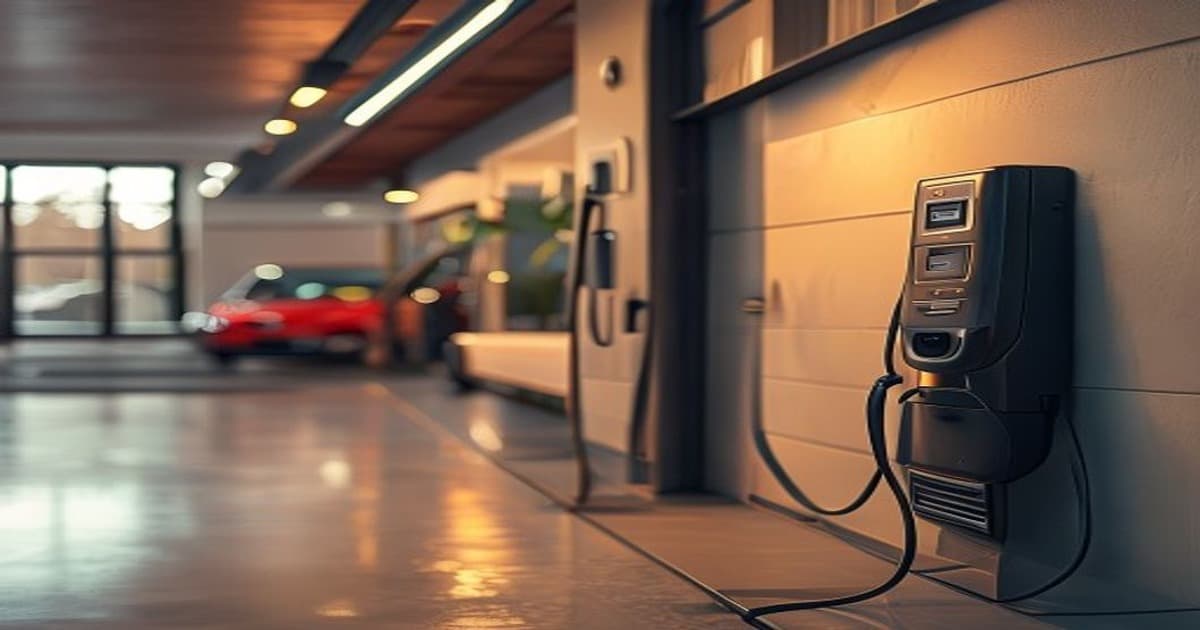
Find the best EV charger for home 2026 that fits your budget and charging needs. This guide reviews top picks, highlights key features, and shows how to pair your charger with solar power for maximum savings.
The Best Home EV Chargers of 2026: A Comprehensive Guide
As electric vehicle adoption accelerates in 2026, choosing the best ev charger for home 2026 has become a critical decision for new and seasoned EV owners alike. A reliable home charging station not only ensures your vehicle is ready each morning but also can save you money compared to public charging networks. In this guide, we break down the top contenders, examine their specifications, and offer practical advice on pairing your charger with solar energy solutions to maximize efficiency and sustainability.
Top Picks for the Best EV Charger for Home 2026
When evaluating the best ev charger for home 2026, consider charging speed, smart features, installation requirements, and compatibility with your vehicle’s connector type (J1772 or Tesla NACS). The market now offers a range of Level 2 chargers that deliver between 7.2 kW and 11.5 kW, enough to replenish most EVs overnight. Below are our top three selections, each excelling in a different category: overall performance, premium upgrades, and budget-friendly flexibility.
Shop ALLPOWERS Solar Products to explore solar panels that can offset the electricity used by your EV charger, reducing your carbon footprint and utility bills.
Best Overall: Emporia Pro
The Emporia Pro stands out as the best ev charger for home 2026 for most users thanks to its impressive blend of power, intelligence, and affordability. Delivering up to 11.5 kW (48 amps) on a 240‑volt circuit, it can add roughly 40 miles of range per hour to a typical EV, ensuring a full charge even for larger battery packs.
Key features that make the Emporia Pro a top choice include:
- Dynamic load balancing that adjusts charging speed based on your home’s overall electricity consumption, preventing overloads.
- Wi‑Fi connectivity and a robust mobile app for scheduling, real‑time monitoring, and integration with home energy management systems.
- ENERGY STAR certification guaranteeing efficient operation.
- UL‑listed for safety and a three‑year warranty.
Installation is straightforward for a licensed electrician, and the unit’s compact design fits neatly in most garages. For homeowners interested in solar synergy, pairing the Emporia Pro with a solar array allows you to charge your vehicle using clean, self‑generated electricity. Consider investing in LiTime Lithium Batteries for storage, or explore Complete Off-Grid Solar Kits on Amazon if you aim for greater energy independence.
Shop Solar Inverters on Amazon and MPPT Solar Charge Controllers on Amazon to build a system that seamlessly feeds solar power to both your home and your EV charger.
Best Upgrade Buy: Tesla Universal Wall Connector
For Tesla owners—or anyone planning to future‑proof their garage for multiple EV brands—the Tesla Universal Wall Connector represents the pinnacle of convenience and performance. Capable of delivering up to 11.5 kW (48 amps) with a Tesla‑specific connector and an included J1772 adapter, it works with virtually every EV on the market today.
Highlights of the Tesla Universal Wall Connector:
- Sleek, minimalist design that matches Tesla’s aesthetic.
- Auto‑sensing switch between Tesla and J1772 modes, eliminating the need to carry separate adapters.
- Wi‑Fi enabled for over‑the‑air firmware updates and remote monitoring via the Tesla app.
- Power sharing capability, allowing multiple Wall Connectors to distribute available current intelligently—ideal for households with more than one EV.
- Built‑in cable management with a 24‑foot reachable cable.
While the price point is higher than many competitors, the build quality and Tesla’s charging network reputation justify the investment for those seeking a premium experience. To maximize the environmental benefits, consider powering your Wall Connector with solar energy. Products like SolarEdge Home Battery on Amazon and Enphase Home Energy on Amazon provide reliable storage and management solutions that let you store excess solar production for nighttime charging.
If you’re looking to expand your solar setup, browse Monocrystalline Solar Panels on Amazon or SunPower Solar Panels on Amazon for high‑efficiency modules that generate more power per square foot—perfect for homes with limited roof space.
Best Budget Pick for J1772 EVs: Lectron Portable Level 2
Not every EV owner needs a hard‑wired, high‑amp charger. For drivers of J1772‑compatible vehicles (most non‑Tesla EVs) who want an affordable, flexible solution, the Lectron Portable Level 2 charger is an excellent pick. Priced well under $300, it delivers up to 7.2 kW (30 amps) using a standard NEMA 6‑50 plug, making it ideal for renters, condo dwellers, or anyone who may move their charging station.
The Lectron charger offers:
- Plug‑and‑play simplicity—just plug into a 240‑volt outlet and start charging.
- Adjustable amperage (16A or 30A) to match your circuit’s capacity.
- LED indicators for charging status and fault detection.
- Compact, lightweight design with a 20‑foot cable for convenient positioning.
- Three‑year warranty and responsive customer support.
Because it’s portable, you can easily take it to a friend’s house, a vacation rental, or a workplace that offers 240‑volt access. Pairing this charger with a portable solar generator can further reduce reliance on the grid. Check out Portable Solar Generators on Amazon and FOSSiBOT Portable Power Stations for rugged, mobile power stations that can supplement your charging needs during outages or off‑grid adventures.
For longer‑term solar integration, consider adding a battery storage solution such as Solar Battery Storage on Amazon or Power Queen LiFePO4 Batteries to store excess solar energy for use when the sun isn’t shining.
Pairing Your EV Charger with Solar Power: A Smart Move in 2026
While selecting the best ev charger for home 2026 is essential, thinking about how you power that charger amplifies both financial and environmental benefits. Solar photovoltaic (PV) systems have become more affordable and efficient, making it realistic to offset a significant portion of your EV’s electricity consumption.
Begin by assessing your roof’s solar potential—orientation, tilt, shading—and then decide on the system size. A typical 6 kW residential solar array can produce roughly 7,000–8,000 kWh annually in many regions, enough to drive an EV 25,000–30,000 miles per year, depending on efficiency.
Key components to consider:
- Solar panels: Options range from budget‑friendly polycrystalline to premium monocrystalline. Explore 400W Solar Panels on Amazon, 350W Solar Panels on Amazon, and 500W Polycrystalline Solar Panels on Amazon for varied price points.
- Inverters: String inverters, microinverters, or hybrid models convert DC to AC. Look at Solar Inverters on Amazon and Enphase Home Energy on Amazon.
- Charge controllers (if using batteries): MPPT controllers maximize solar harvest. See MPPT Solar Charge Controllers on Amazon.
- Energy storage: Batteries let you store solar energy for nighttime charging. Consider LiTime Lithium Batteries, Redodo Power, or Eco‑Worthy Solar Products.
- Monitoring systems: Platforms like Enphase or SolarEdge provide real‑time production and consumption data, helping you optimize charging schedules.
Many utilities offer net metering or time‑of‑use rates that reward solar owners for exporting excess power during peak hours. By programming your EV charger to draw power during midday when solar production is highest, you can effectively “drive on sunshine.” For a complete off‑grid approach, browse Complete Off-Grid Solar Kits on Amazon and Nature's Generator Solar Systems.
Final Thoughts on Choosing the Best EV Charger for Home 2026
Selecting the best ev charger for home 2026 ultimately hinges on your specific circumstances: vehicle type, electrical panel capacity, budget, and long‑term energy goals. The Emporia Pro offers a balanced mix of power and smart features for most households, the Tesla Universal Wall Connector delivers premium flexibility for Tesla fans and multi‑EV families, and the Lectron Portable Level 2 provides an economical, adaptable option for J1772 drivers.
Regardless of which charger you choose, consider complementing it with a solar PV system to lower operating costs and increase your home’s resilience. The solar market in 2026 offers a wealth of affordable, high‑quality components—from panels and inverters to batteries and portable power stations—making it easier than ever to create a sustainable charging ecosystem.
Ready to take the next step? Start by evaluating your home’s electrical capacity, then explore the linked products below to find the perfect match for your EV and solar aspirations.
Shop Solar Roof Panels on Amazon and Solar Roof Panels on Amazon for innovative roof‑integrated solutions. Discover Victron Solar Products on Amazon for reliable off‑grid and mobile power components. Explore Off-Grid Solar Panels on Amazon and Renogy Solar Panels on Amazon for durable, high‑performance modules. Look at Solar Generators on Amazon and Jackery Power Stations on Amazon for portable power on the go. Check out EcoFlow Delta Pro on Amazon for a high‑capacity, fast‑charging power station. Review Bluetti Portable Power Stations for another robust off‑grid option. Consider Burchda Electric Bikes if you’re looking to expand your electric mobility fleet. Investigate Sun Gold Power and Redodo Power for additional battery and power solutions. Examine Power Queen LiFePO4 Batteries for long‑lasting, safe storage.
By combining a top‑tier EV charger with a thoughtful solar setup, you’ll enjoy lower electricity bills, reduced reliance on the grid, and the satisfaction of powering your vehicle with clean, renewable energy—making 2026 the year you truly drive into the future.
If you're serious about protecting your links, your data, and your brand, it's time to stop sharing raw URLs.
Start using Bilt.ly.
Get started free →