Top Solar Panels for Trolling Motor 2026: A Comprehensive Guide
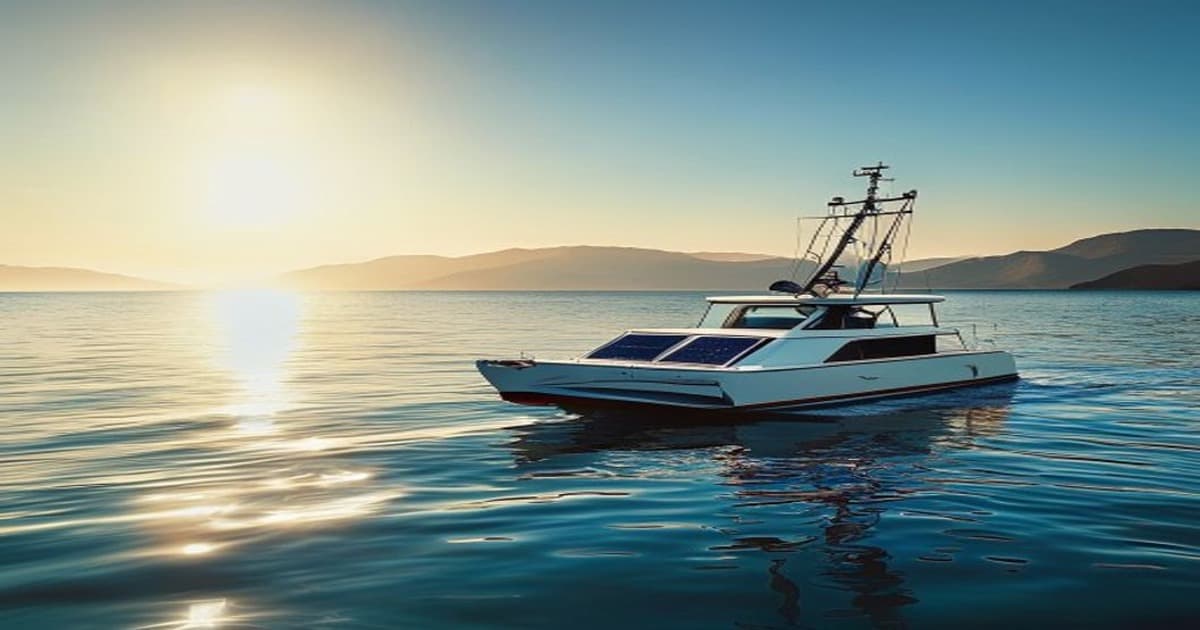
Looking to extend your time on the water with clean power? This guide breaks down everything you need to know about pairing solar panels with trolling motors, from understanding charge requirements to selecting the right gear for 2026.
Top Solar Panels for Trolling Motor 2026: A Comprehensive Guide
If you’re an angler who spends long hours chasing fish, keeping your trolling motor battery topped off can make the difference between a productive day and an early return to shore. In 2026, pairing a best solar panels for trolling motor 2026 setup with your boat is easier and more affordable than ever. Solar charging lets you harness sunlight to replenish deep‑cycle batteries, extending runtime without noisy generators or frequent trips to the marina. This article walks you through the fundamentals of solar charging for trolling motors, shows you how to pick the right panel size and type, highlights top products available today, and wraps up with tips to maximize your investment. Throughout, you’ll find convenient affiliate links to help you shop the recommended gear.
Best Solar Panels for Trolling Motor 2026: Understanding Solar Charging for Trolling Motors
Before you buy a panel, it helps to understand how solar energy interacts with your trolling motor system. A trolling motor typically runs on a 12V, 24V, or 36V deep‑cycle battery bank. The motor draws current (measured in amps) depending on speed, load, and water conditions. To keep the battery charged, your solar array must produce enough watt‑hours (Wh) each day to replace the energy you consume.
How Much Power Do You Need?
Start by estimating daily amp‑hour (Ah) usage. For example, a 50 lb thrust trolling motor running at medium speed might pull 20 amps. If you fish for 5 hours, that’s 100 Ah drawn from a 12V battery (≈1200 Wh). Add a 20 % buffer for inefficiencies, and you need roughly 1440 Wh of solar input per day.
Solar panel output is rated in watts under ideal conditions (standard test conditions, or STC). Real‑world yield is lower due to sun angle, shading, temperature, and wiring losses. A good rule of thumb is to multiply the panel’s wattage by 4 – 5 sun‑hours to estimate daily Wh production. Thus, a 100W panel might generate 400‑500 Wh per day in decent sunlight.
Why Solar Beats Generators for Trolling Motors
- Silent operation – No noise to scare fish.
- Zero fuel cost – Sunlight is free.
- Low maintenance – No oil changes or spark plugs.
- Eco‑friendly – Reduces emissions and spill risk.
With these basics in mind, let’s move on to selecting the right hardware.
Best Solar Panels for Trolling Motor 2026: Choosing the Right Solar Panel for Your Trolling Motor
Choosing the ideal solar panel involves more than just wattage. You’ll need to consider voltage compatibility, panel type, durability, and whether you want a portable solution or a permanent mount.
Voltage and System Configuration
Most small trolling motor setups run on 12V batteries. If you have a 24V or 36V system, you’ll either need panels wired in series to match the voltage or use a charge controller that steps up the voltage. A common approach is to keep the solar array at 12V and use a DC‑DC charger to boost to 24V/36V, but many anglers prefer a simple 12V panel paired with a 12V battery and a trolling motor that runs at 12V.
Monocrystalline vs. Polycrystalline
For limited space on a kayak or small boat, monocrystalline panels offer the highest efficiency (typically 18‑22 %). They perform better in low‑light conditions and have a longer lifespan. Polycrystalline panels are cheaper but larger for the same wattage. Given the premium on space and reliability, monocrystalline is the recommended choice for a best solar panels for trolling motor 2026 build.
Portable vs. Fixed Mount
- Portable solar suitcases or foldable panels are perfect for kayaks, canoes, or small jon boats. They can be set up when you’re on the water and stored when not in use.
- Fixed mounts (z‑brackets or rail mounts) work well on larger boats with a hard top or bimini, providing a semi‑permanent solution that’s always ready.
Essential Balance‑of‑System Components
Even the best panel needs a charge controller, wiring, and connectors to safely charge your battery.
- MPPT solar charge controllers extract up to 30 % more power than PWM controllers, especially when panel voltage exceeds battery voltage. Look for models with built‑in USB or 12V outlets for convenience.
- Marine‑grade wiring (tinned copper) resists corrosion.
- MC4 connectors and waterproof splice kits keep connections safe from spray.
With those considerations in mind, here are some top product picks for 2026, each linked directly to a trusted retailer.
Best Solar Panels for Trolling Motor 2026: Top Solar Panel Options for Trolling Motors in 2026
Below is a curated list of solar panels, kits, and accessories that consistently earn high marks from anglers and RV enthusiasts. Each item includes an affiliate link—click to see current pricing, read reviews, and make your purchase.
High‑Efficiency Monocrystalline Panels
If you want maximum output per square foot, these monocrystalline options are hard to beat.
- Monocrystalline Solar Panels on Amazon – A versatile 100W panel with high‑efficiency cells, ideal for mounting on a kayak’s rear deck.
- 500W Solar Panels on Amazon – For larger boats, a 500W array can recharge a deep‑cycle bank quickly; consider wiring two 250W panels in parallel.
- 400W Solar Panels on Amazon – A mid‑size solution that balances output and footprint.
- 350W Solar Panels on Amazon – Perfect for anglers who want solid performance without overloading a small battery bank.
- 500W Polycrystalline Solar Panels on Amazon – A budget‑friendly alternative if you have ample mounting space.
- SunPower Solar Panels on Amazon – Premium efficiency (up to 23 %) with a rugged frame built for marine environments.
- Renogy Solar Panels on Amazon – Known for reliable performance and excellent customer support; offers a range of wattages.
- Victron Solar Products on Amazon – High‑quality components that pair well with Victron charge controllers and monitors.
- Off-Grid Solar Panels on Amazon – Designed for rugged off‑grid use, featuring corrosion‑resistant frames.
- Solar Roof Panels on Amazon – Although marketed for homes, these rigid panels work well on boat hardtops or bimini tops.
- Solar Roof Panels on Amazon – Another roof‑panel option with a slightly different mounting system.
- Enphase Home Energy on Amazon – Microinverter‑based panels that can be useful if you already have an Enphase ecosystem.
- SolarEdge Home Battery on Amazon – While primarily a battery, the SolarEdge ecosystem includes optimizers that can boost panel output.
- SolarEdge Home Battery on Amazon – A second link to the same product line for easy reference.
- ALLPOWERS Solar Products – Portable foldable panels with built‑in kickstands, great for quick deployment on the shore.
- Eco-Worthy Solar Products – Affordable kits that include panels, controller, and cabling—a solid starter pack.
- Amazon Solar Products – A broad landing page where you can browse multiple brands and wattages in one place.
Portable Solar Generators & Power Stations
Sometimes an all‑in‑one solution is simplest, especially if you want to store solar energy for use after sunset.
- Portable Solar Generators on Amazon – Ready‑to‑run units that combine panels, battery, and inverter.
- Solar Generators on Amazon – Another category of generator‑style systems with varying capacities.
- Jackery Power Stations on Amazon – Popular for their lightweight design and reliable lithium‑ion batteries.
- Jackery Solar Generators – Jackery’s solar‑compatible power stations, often sold as bundles.
- EcoFlow Power Stations on Amazon – High‑output stations with fast‑charging technology.
- EcoFlow Delta Pro on Amazon – A 3.6kWh unit capable of running a trolling motor for hours.
- BLUETTI Portable Power Stations – Known for robust LiFePO4 batteries and multiple AC/DC outlets.
- FOSSiBOT Portable Power Stations – Rugged, water‑resistant options suited for harsh marine environments.
- Goal Zero Power Stations on Amazon – A trusted brand with excellent build quality and expandable battery options.
Batteries & Storage
To make the most of your solar harvest, pair your panels with a high‑quality deep‑cycle battery. Lithium LiFePO4 batteries offer longer life, lighter weight, and better charge acceptance than traditional lead‑acid.
- LiTime Lithium Batteries – Reliable LiFePO4 batteries with built‑in BMS, ideal for trolling motor use.
- Solar Battery Storage on Amazon – Dedicated solar‑ready battery banks.
- Power Queen LiFePO4 Batteries – Another strong LiFePO4 option with excellent cycle life.
- Redodo Power – Budget‑friendly lithium batteries that still deliver solid performance.
- Sun Gold Power – Offers both batteries and solar kits with good warranties.
Charge Controllers & Inverters
A quality MPPT charge controller ensures you harvest every possible watt from your panels.
- MPPT Solar Charge Controllers on Amazon – Look for models with Bluetooth monitoring for easy troubleshooting.
- Solar Inverters on Amazon – If you need AC power for accessories, a pure sine wave inverter is the cleanest choice.
- Complete Off-Grid Solar Kits on Amazon – All‑in‑one kits that include panels, controller, wiring, and sometimes a battery—perfect for beginners.
Additional Gear for Anglers
While not directly related to solar charging, these items complement a solar‑powered trolling motor setup.
- Lectron EV Chargers – If you also drive an electric vehicle to the launch site, a reliable charger keeps you ready.
- Burchda Electric Bikes – For exploring shorelines or trails after a day on the water.
- Nature's Generator Solar Systems – A well‑known brand offering solar generators designed for outdoor enthusiasts.
Wiring It All Together: A Sample Build
To illustrate how the pieces fit, here’s a typical 12V trolling motor solar setup for a medium‑sized jon boat:
- Panel: Two 200W monocrystalline panels wired in parallel (total 400W) → roughly 1600‑2000Wh/day under good sun.
- Mount: Adjustable Z‑brackets on the gunwales, allowing tilt for optimal sun angle.
- Charge Controller: A 30A MPPT unit with LCD display (MPPT Solar Charge Controllers on Amazon).
- Battery: A 100Ah LiFePO4 battery (LiTime Lithium Batteries) providing ~1200Wh usable capacity.
- Wiring: 10‑AWG tinned copper marine wire with MC4 connectors and waterproof lugs.
- Optional: A 150W pure sine wave inverter (Solar Inverters on Amazon) for running a small fish finder or charging a phone.
This configuration can replenish a 12V battery after a half‑day of trolling and still have reserve capacity for evenings or cloudy periods.
Conclusion: Maximizing Your Trolling Motor's Potential with Solar Power
Investing in a solar charging system for your trolling motor is one of the smartest upgrades you can make in 2026. Not only does it extend your time on the water, but it also reduces reliance on noisy generators, cuts fuel costs, and minimizes your environmental footprint. By selecting efficient monocrystalline panels, pairing them with an MPPT charge controller and a durable lithium battery, you’ll enjoy reliable, silent power wherever your angling adventures take you.
Remember to size your system based on real‑world amp‑hour usage, prioritize marine‑grade components, and take advantage of the convenience of portable solar generators if you frequently switch between vessels. The links provided throughout this article lead to trusted retailers where you can compare specs, read verified customer reviews, and secure the best deals.
Now that you’re equipped with the knowledge and resources to choose the best solar panels for trolling motor 2026, it’s time to hit the water with confidence—let the sun keep your motor running, and focus on what matters most: landing the big one.
If you're serious about protecting your links, your data, and your brand, it's time to stop sharing raw URLs.
Start using Bilt.ly.
Get started free →