Why Serious Affiliate Marketers Use Branded Short Links (And You Should Too)
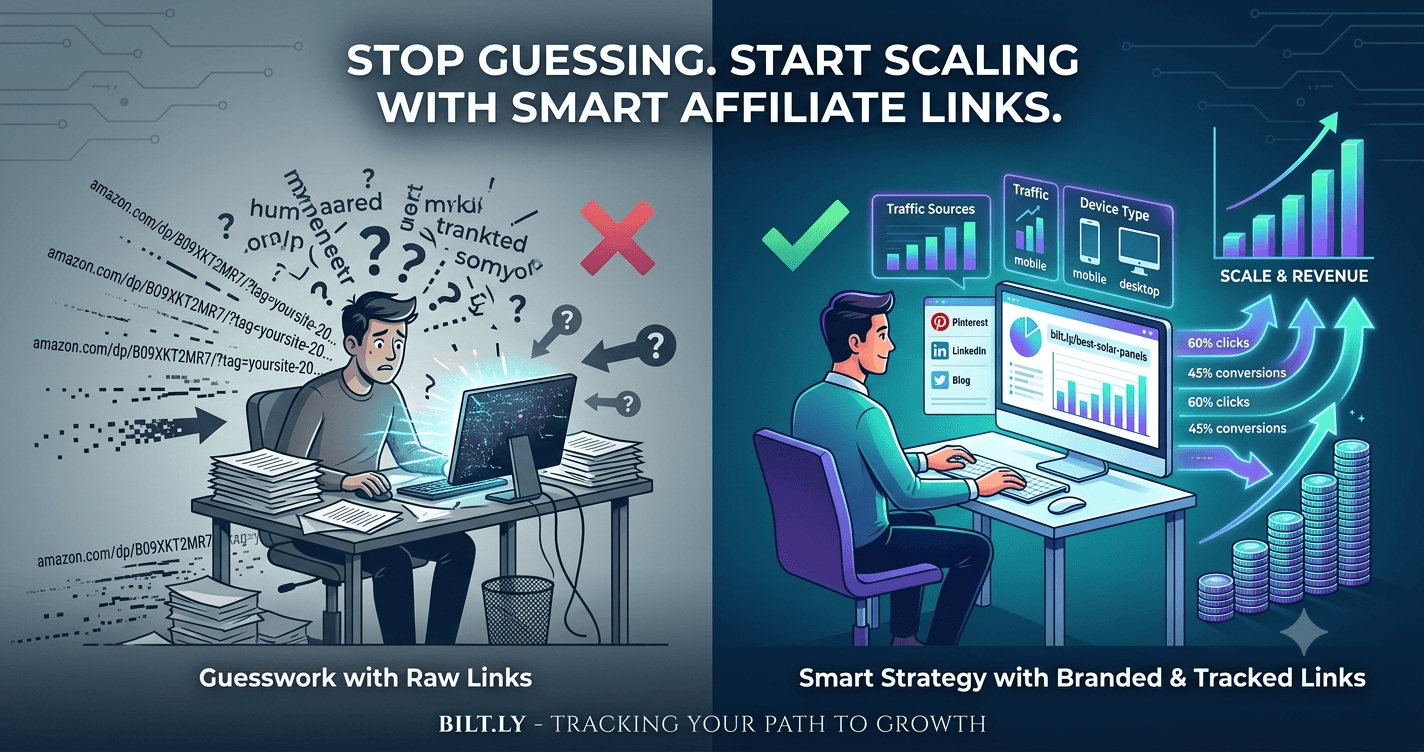
Raw affiliate links are hurting your click-through rates and leaving you with zero data on what actually converts. Serious affiliate marketers use branded short links to build trust with their audience, track performance across every platform, and protect their content from link rot. Here's why the switch is easier than you think.
There's a version of affiliate marketing where you paste a raw Amazon link into every post and hope for the best. And there's a version where you know exactly which post, which platform, and which day of the week drives your sales.
The difference isn't luck. It's how you handle your links.
The Problem With Raw Affiliate Links
If you've ever promoted something on Amazon, you know what the link looks like:
amazon.com/dp/B09XKT2MR7/?tag=yoursite-20&linkCode=ogi&th=1&psc=1
That URL is doing you no favors. It's ugly. It screams "this person is trying to make money off me." It gets truncated in social posts. It triggers spam filters on email platforms. And most importantly -- you have zero idea what happens after someone clicks it.
Did they click from your Pinterest pin or your LinkedIn post? Did they click on a Tuesday or a Saturday? Did mobile or desktop users convert better?
You don't know. And without that data, you can't grow.
What a Branded Short Link Actually Does
A branded short link replaces that mess with something clean:
bilt.ly/best-solar-panels
Same destination. Same affiliate commission. Completely different perception.
But the real value isn't aesthetics -- it's the data layer underneath. Every click on a bilt.ly short link tells you:
- Which platform sent the traffic (Pinterest, LinkedIn, Reddit, email)
- What device the visitor used (mobile vs desktop)
- What country they're in
- What time of day they clicked
- How many unique visitors vs repeat clicks This is the difference between running a content business and running a guessing game.
Trust Is a Conversion Factor
Think about how you process links when you're scrolling. You see two options:
Option A: amzn.to/3xK9mPQ
Option B: bilt.ly/best-solar-generator
Option B tells you exactly what you're getting before you click. It looks intentional. It looks like someone who knows what they're doing put it there. That perception translates directly into clicks -- and clicks translate into commissions.
Raw affiliate links, especially Amazon's, carry an implicit "I'm being sold to" signal that causes hesitation. Branded links carry a "this person curated this for me" signal that builds trust.
In affiliate marketing, trust is the conversion factor most people ignore.
The Data Advantage Is Where You Actually Scale
Here's the real reason serious affiliate marketers care about link tracking: it tells you where to double down.
Say you're posting solar content across Pinterest, LinkedIn, and a blog. After 30 days of tracked links you discover:
- Pinterest drives 60% of your clicks but 20% of your conversions
- LinkedIn drives 15% of your clicks but 45% of your conversions
- Your blog drives 25% of your clicks and 35% of your conversions Without tracked links, you'd probably keep splitting your effort equally. With that data, you put 70% of your energy into LinkedIn and your blog -- and your revenue climbs without adding more work.
That's how you scale. Not by posting more, but by posting smarter. And you can't post smarter without data.
Platform Rules Favor Branded Links
There's a practical reason beyond branding and analytics: platform moderation.
Pinterest, LinkedIn, and Reddit all have algorithms and human moderators that assess link quality. Raw affiliate links -- especially long Amazon URLs with tracking parameters -- are frequently flagged as spam or promotional content. Branded short links pass these filters more cleanly because they look like legitimate website URLs rather than affiliate tracking strings.
This doesn't mean you can violate platform rules on affiliate disclosure -- you still need to disclose. But a clean, branded link from bilt.ly gives your content a better chance of being seen in the first place.
Protecting Your Old Content With Redirects
Here's a scenario most affiliate marketers eventually face: a product gets discontinued, a program changes its URL structure, or you switch affiliate networks entirely. Every post you've ever written with that raw affiliate link is now broken.
With bilt.ly short links, that's a one-minute fix. Update the destination URL in your bilt.ly dashboard and every post, pin, email, and video description that uses that short link instantly points to the new destination. No hunting through old posts. No broken link checkers. One update, everywhere fixed.
This is link rot protection -- and it's one of the most underrated features of using a URL shortener for affiliate marketing.
What This Looks Like in Practice
Here's a real workflow: you write a review of the best solar generators for RV use. You shorten each product link with bilt.ly, giving each one a descriptive slug -- bilt.ly/jackery-1000, bilt.ly/ecoflow-delta, bilt.ly/allpowers-kit. You post the article to your blog, pin the cover image to Pinterest with the link in the description, share a summary on LinkedIn, and drop the link in a relevant Reddit thread.
A week later you check your bilt.ly analytics dashboard. The Jackery link got 80% of the clicks. The EcoFlow link barely moved. You write a dedicated Jackery comparison article, double down on Pinterest for that content, and watch your commission rate climb.
That's the workflow. It's not complicated. But it requires branded, tracked links -- not raw affiliate strings.
Getting Started With Bilt.ly
The barrier to entry is low. Bilt.ly's free tier lets you create shortened, tracked links immediately -- no credit card required. You get click analytics, referral source tracking, and clean branded URLs from day one.
When you're ready to scale, Bilt.ly's paid plans unlock custom slugs, advanced analytics, QR code generation, and higher link volumes -- everything a serious affiliate operation needs.
If you're already doing affiliate marketing and you're not tracking your links, you're flying blind. The data is available. The tools are free to start. The only thing between you and knowing what actually works is taking five minutes to set up your first branded short link.
Start free at Bilt.ly -- your future self who knows which posts actually convert will thank you.
If you're serious about protecting your links, your data, and your brand, it's time to stop sharing raw URLs.
Start using Bilt.ly.
Get started free →