Your Bio Page Is Your Storefront. Make It Work Harder
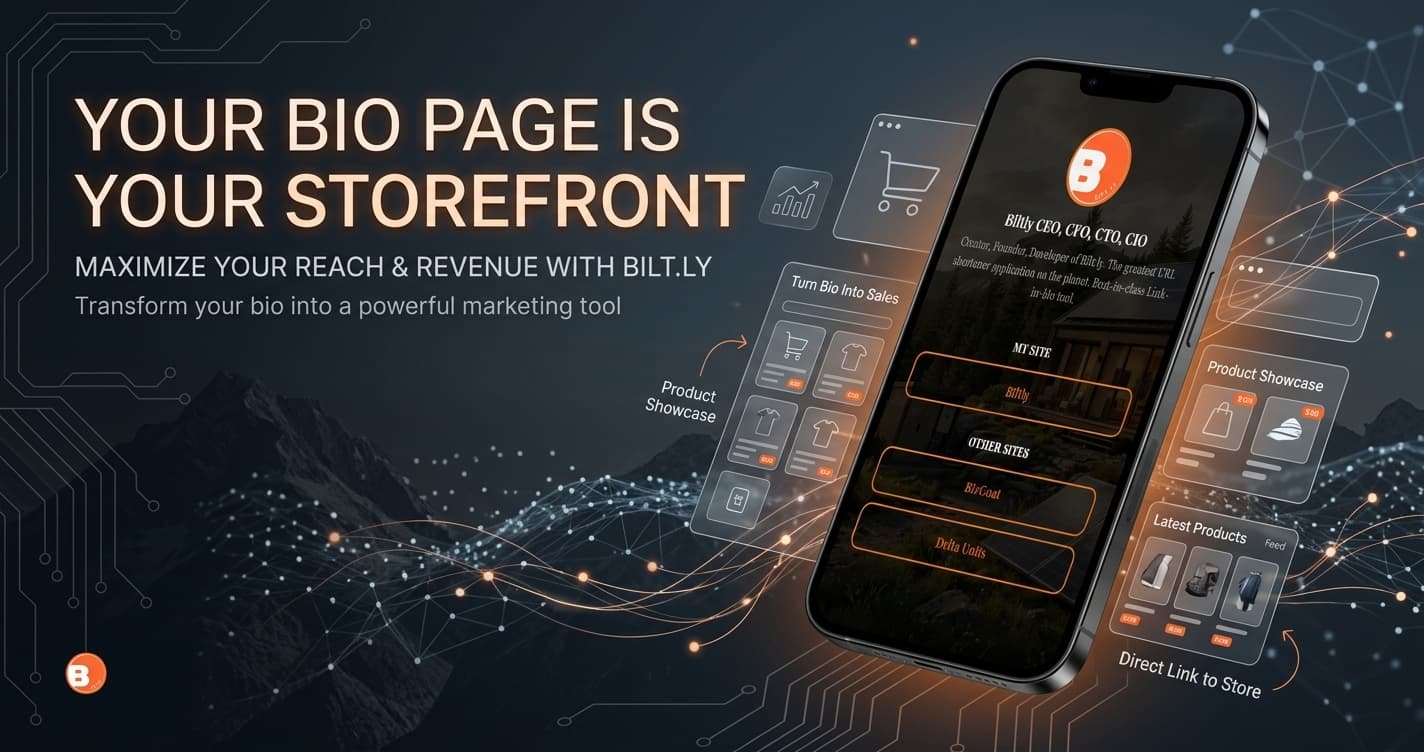
Your link in bio is the only piece of real estate you own on every social platform. It sits at the top of your profile. It travels with you from Instagram to Ti
Your Bio Page Is Your Storefront. Make It Work Harder.
Your link in bio is the only piece of real estate you own on every social platform. It sits at the top of your profile. It travels with you from Instagram to TikTok to X to LinkedIn. When someone clicks it, they are telling you they want to know more.
Most bio pages are passive. A list of links. A logo. Maybe a color scheme. They wait for visitors to decide what to do next.
A bio page should guide. It should convert. It should tell the visitor exactly where to go and why.
What a Bio Page Actually Does
A bio page solves a simple problem. Social platforms give you one link. You have many destinations: your latest product, your newsletter, your booking calendar, your portfolio, or your contact form.
A bio page collects those destinations behind one URL. That is the baseline. The minimum viable product.
The best bio pages do three things the minimum does not.
They prioritize. The most important destination gets the most visual weight. A primary button, a featured card, or an eye-catching banner. Visitors do not have to hunt for what matters.
They track. You see which links get clicked, which sources send traffic, and what time of day is active. You learn what your audience actually cares about.
They adapt. A campaign ends. A product launches. A webinar goes live. You swap the primary link in seconds. No need to edit your Instagram bio. No need to update TikTok. The bio page stays the same. The destination changes.
Where Bitly Falls Short for Independent Operators
Bitly built the category. Their link-in-bio product is polished. It integrates with their URL shortener. It has QR codes, scheduling, and analytics.
It also has enterprise pricing.
The free tier gives you a Bitly-branded page. It has limited links and basic analytics. To remove Bitly branding you need a paid plan. To get custom domains you need a higher tier. To access the analytics that actually help you make decisions you climb the pricing ladder.
For a marketing team at a mid-market company this makes sense. They have budget. They need SSO, team permissions, and compliance reports.
For a freelancer, an agency owner, a consultant, or a creator selling digital products, the value curve flattens fast. You pay for features you will never use. You navigate a dashboard built for collaboration when you work alone. You get AI insights on campaign performance when you just want to know which link paid your rent this month.
Where Linktree Falls Short for Business Operators
Linktree owns the mindshare. It is the default. It is simple. It is familiar. Visitors recognize the layout instantly.
That familiarity is also the ceiling.
Linktree is a directory. It is a list. It does not prioritize. Every link gets equal visual weight unless you pay for the Pro plan to reorder and style. It does not track revenue. It tracks clicks. A click on a free resource looks the same as a click on a two-thousand-dollar course.
It does not integrate with your invoicing. It does not know which client paid. It does not tell you that the visitor who clicked your proposal link came from your email newsletter versus your Instagram story.
It is a passive container. You pour traffic in and hope something converts.
What Makes a Bio Page Work for You
The operator who treats their bio page as a conversion tool asks different questions.
How many clicks did I get? Which click turned into a signed proposal?
How many profile visits? Which source sent the visitor who booked a discovery call?
Is my page pretty? Does my page move the visitor toward the next step?
A bio page built for operators has three layers.
Layer one: The hook. The first thing a visitor sees answers what do you do and why should I care. A headline, a subhead, or a primary action. No scrolling required.
Layer two: The path. Secondary actions grouped by intent: Learn, Buy, Hire, or Subscribe. Each path is distinct. The visitor self-segments.
Layer three: The signal. Analytics that connect to outcomes. Clicks. Conversions. Revenue attribution. Source tracking that survives platform changes.
The Biltly Approach
Biltly started as a URL shortener for teams that needed branded links without enterprise contracts. The bio page came from the same insight. Operators need professional tools that do not require enterprise budgets.
The Biltly bio page is built on three principles.
One: Your brand. The free tier removes Biltly branding. Your domain, your logo, and your colors. Your page looks like an extension of your site because it is.
Two: One link, multiple destinations, clear priority. The primary button sits at the top. Featured cards sit below. Standard links are at the bottom. You decide what gets the spotlight. You change it in one click.
Three: Analytics that connect to business outcomes. Click data is table stakes. Biltly adds source tracking that persists. UTM parameters that stick. Integration points for the tools that actually close deals: your CRM, your invoicing, and your checkout.
When a visitor clicks your proposal link on the bio page, Biltly knows. When that same visitor becomes a paid invoice in InvoiceGoat, the loop closes. You see the full path: Instagram bio to proposal click to signed contract to paid invoice.
That is the unified workflow. A data pipeline.
The Real Difference
Bitly asks how many links they can track. Linktree asks how many creators they can onboard. Biltly asks which link actually got you paid.
If you are building a business that runs on proposals, invoices, and repeat clients, that third question is the only one that matters.
Your bio page should be the first step in your funnel. It should capture intent. It should feed your pipeline. It should make the path from stranger to client obvious.
That is what Biltly's bio page does. It turns your single social link into a conversion asset. No enterprise contract required. No features you will never use. Just the tools that move the needle.
Try It
Set up your page. Add your primary offer. Connect your domain. Watch the data come in.
The next time someone asks what do you do, you send them to your bio page. The page does the rest.
If you're serious about protecting your links, your data, and your brand, it's time to stop sharing raw URLs.
Start using Bilt.ly.
Get started free →